2,87 %CTR
1,85 €Cost Per Click (CPC)
3,81 %conversion rate
48,56 €Cost Per Lead (CPL)


The cost of Google advertising includes the ad budget, campaign management, and potential initial setup. For a company looking to increase sales in Slovenia or across multiple markets, we calculate the budget based on sales targets. Let’s take a look at costs by industry and examples with a monthly advertising budget ranging from €3,000 to €12,000.
The costs for displaying ads and paying the service provider are separate line items. In the first month, additional costs may include setting up tracking, preparing ads, or making changes to the website.
The amount you spend on Google Ads. Check how much of your total budget will actually be allocated to ads.
Preparation, monitoring, improvements, and reporting. Compare offers at the same scope of work.
Measurements, a new landing page, photos, or a video. Agree on what’s included and what will be billed separately.
Management of online advertising at Notic starts at €649. The final offer determines the scope of cooperation, the billing period, VAT, and initial work. See how we manage Google advertising.
The entire investment also covers the work that enables ads to lead to sales. Part of this is done before startup, and part of it as we go. When reviewing the offer, check which of the items below are already included in the management.
| Premise | When is an expense recognized? | What to agree upon in the offer? |
|---|---|---|
| Measurement and connection to sales | Initial setup; then inspection and maintenance. | Conversions, analytics, consent management, and, if needed, integration with CRM. |
| Landing pages | During construction or renovation; improvements based on results. | Copywriting, design, layout, and testing of forms or the checkout process. |
| Advertising materials | Before launch and for new offers or trials. | Photographs, texts, banners, video, and format adjustments. |
| Localization | Upon market entry and changes in supply. | Translation and linguistic review of ads, landing pages, and product data. |
| Product information | Initial connection and ongoing maintenance. | Optimization of the feed for Merchant Center, prices, stock, and potential errors. |
| Tools | Monthly or annual subscription, if you need them. | Potential reporting, data source, or call tracking tools. |
For each item, determine the scope, the person in charge, and the billing method. If you already have useful materials or established measurements ready, take this into account when estimating the initial work.

CPC is cost per click. If you spend €6,000 for 2,000 clicks, the average CPC is €3. We cannot determine Slovenian prices with a single amount for all industries. This figure is a calculation example; we prepare an estimate for your company for selected keywords and markets.
For a useful estimate, you need data for your business and location. Competition, ad and page quality, and search circumstances affect the price. Google explains ad ranking factors.
Quality Score is a diagnostic rating from 1 to 10 at the keyword level. Summarize the expected CTR, ad relevance, and landing page experience. Each component is rated as below average, average, or above average compared to other ads for the same keyword.
Sample view. Please check the actual values in your account.
Practically: if the landing page is subpar, a higher bid does not fix the disconnected message, slow loading, or unclear path to an inquiry.

0.38 € is the lower, and 1.27 € is the upper historical estimate for the top-of-page bid. The range does not represent the lowest and highest price you will pay. Google calculates it from past auctions for your selected location, language, and network.
An ad may approach this area with a less competitive query, good ad and landing page relevance, or during times of lower demand.
The ad can approach this area with high-purchasing-intent searches, multiple competitors, a narrower location, or during a part of the season when advertisers increase bids.
For the budget plan, the CMO or director also needs the search volume, expected CTR, conversion rate, sales value, and the share of leads that sales actually closes. Keyword Planner suggests bidding in the auction. The final price is only revealed by a campaign with proper measurement.
There is no single European price list. The cards below show benchmark data for Search or Shopping campaigns in Euros. The comparison shows why the cost-per-click alone is not enough for budgeting decisions. For services, conversion is typically an inquiry, while for an online store, it is a purchase.
These are external benchmark data, not the results of Notic's clients or the Slovenian average. The DACH source combines its own accounts and adjustments from broader benchmarks. For the beauty card, the cost of acquisition is calculated from the published cost-per-click and conversion rate. For a business decision, compare your data by the same market, period, campaign type, and conversion definition.
Sources: Adkontakt, DACH Google Ads Benchmarks 2026. For the European online store, we are performing additional checks SMEC Market Observer, which on September 14, 2026, with 650 million euros of European advertising spend, cites medians of €0.44 for Search, €0.41 for Performance Max, and €0.36 for Shopping. The difference between the sources shows why a single benchmark is not a price list.
A Slovenian online store can achieve different costs with the same offering across different markets. Competition, purchasing power, brand awareness, delivery costs, ad language, and the quality of the localized landing page vary.
Values are selected to illustrate the budget decision. They do not represent the market average or the client's results.
We don't lower costs just by lowering bids. Most room for improvement often lies in irrelevant search terms, poor ad-to-landing-page alignment, and optimizing for the wrong type of conversion.
In the long run, a portion of the demand can be successfully captured by organic traffic, which reduces your reliance on pay-per-click auctions. This is supported by a thoughtful SEO Optimisation, which ensures a stable flow of visitors to your website.
Each case changes one assumption. The result is a mathematical illustration, not a promised saving.
Review the search terms report and exclude queries that do not match your offering. The ad should directly answer the search intent, and the landing page should continue the same promise. With automated bidding strategies, feed Google conversions that represent business value, not just every submitted form.
Track brands, products, and brand searches separately. This moves assets to where there is sufficient demand and an acceptable cost of qualified demand. Judge success by the cost of a business-useful result and by sales.
During the summer, demand, competitor activity, and the search terms for which ads appear change. CPC is also affected by changes to your bids, targeting, and ad quality. Therefore, a higher cost-per-click is not always the result of the season. Google cites competition and shifts in user interest among the reasons for the fluctuations. Overview of reasons for result changes.
For the same market and comparable campaigns, check the CPC, the number of inquiries, and sales by month. Also, compare the same period of the previous year. For front doors, heating, or industrial equipment, factor in the time from initial interest to contract signing: prepare ads and materials ahead of the period when you want to increase sales.
Calculation scenario for a supplier whose demand peaks in autumn.
Allocate the budget based on profitability and order processing capacity. During periods of higher interest, increasing spending makes sense if the additional customers still justify the acquisition cost.
with a digital strategy that connects search intent, ads, and landing pages.
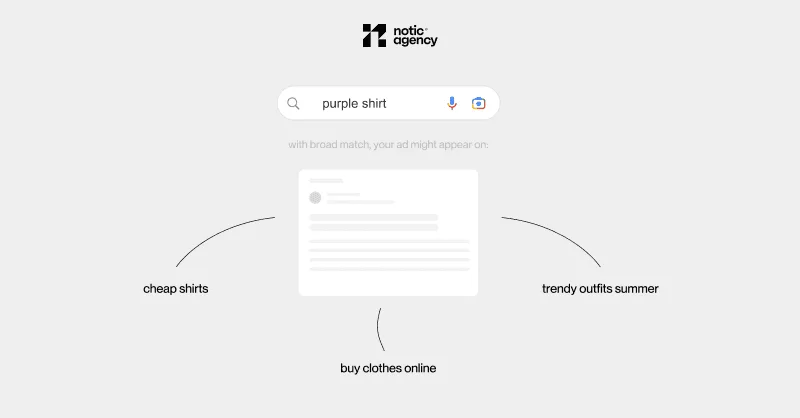
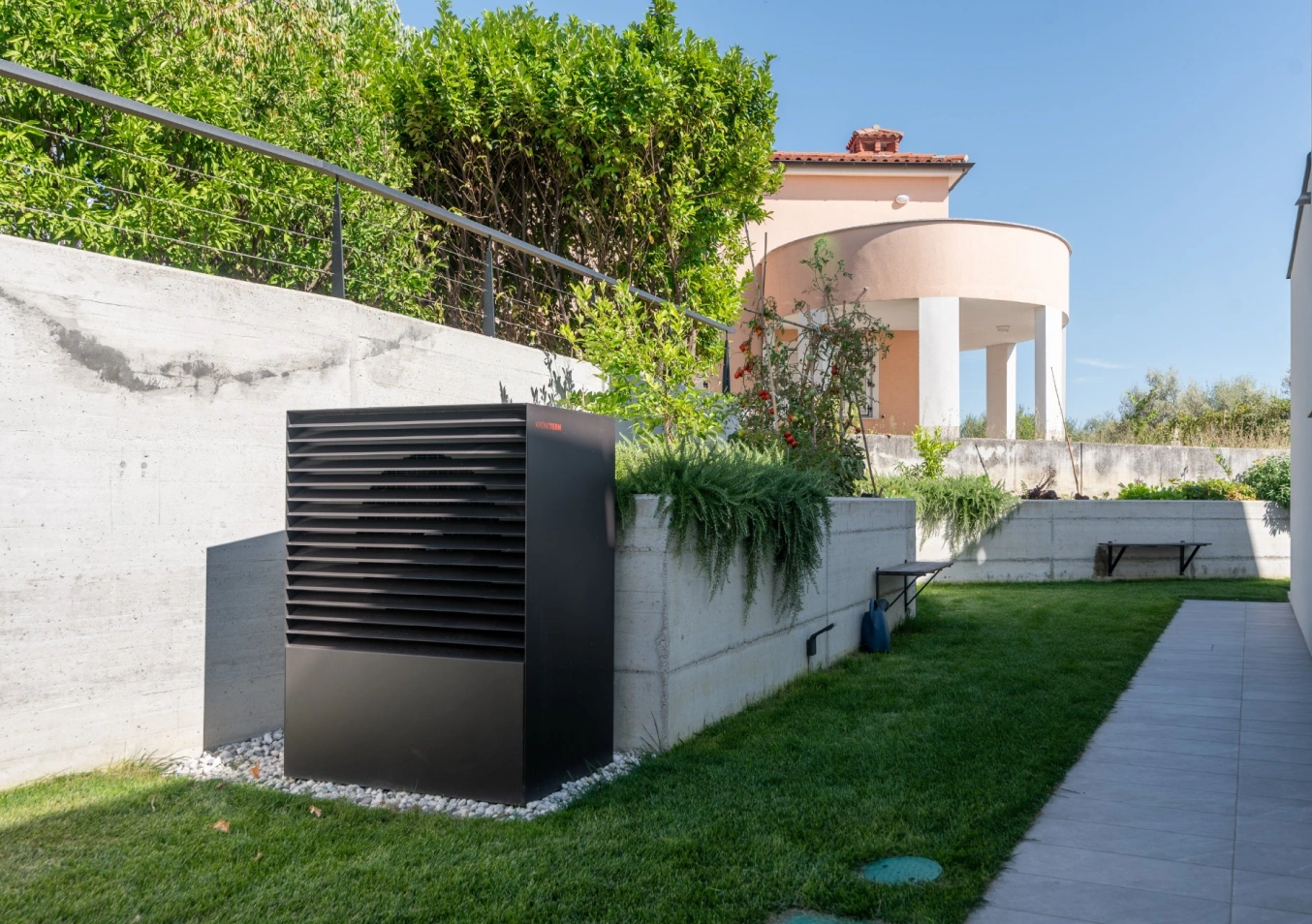
At Kronoterm, we categorized search terms according to user intent and tailored our ads accordingly. Someone who is comparing heating methods needs a different explanation than someone who is already choosing a heat pump.
Explanation of options and answers to questions.
A concrete offer and the path to the inquiry.
What does this mean for the budget? Before increasing your bid, check whether you are paying for searches that match your offer. The queries above illustrate the difference in intent.
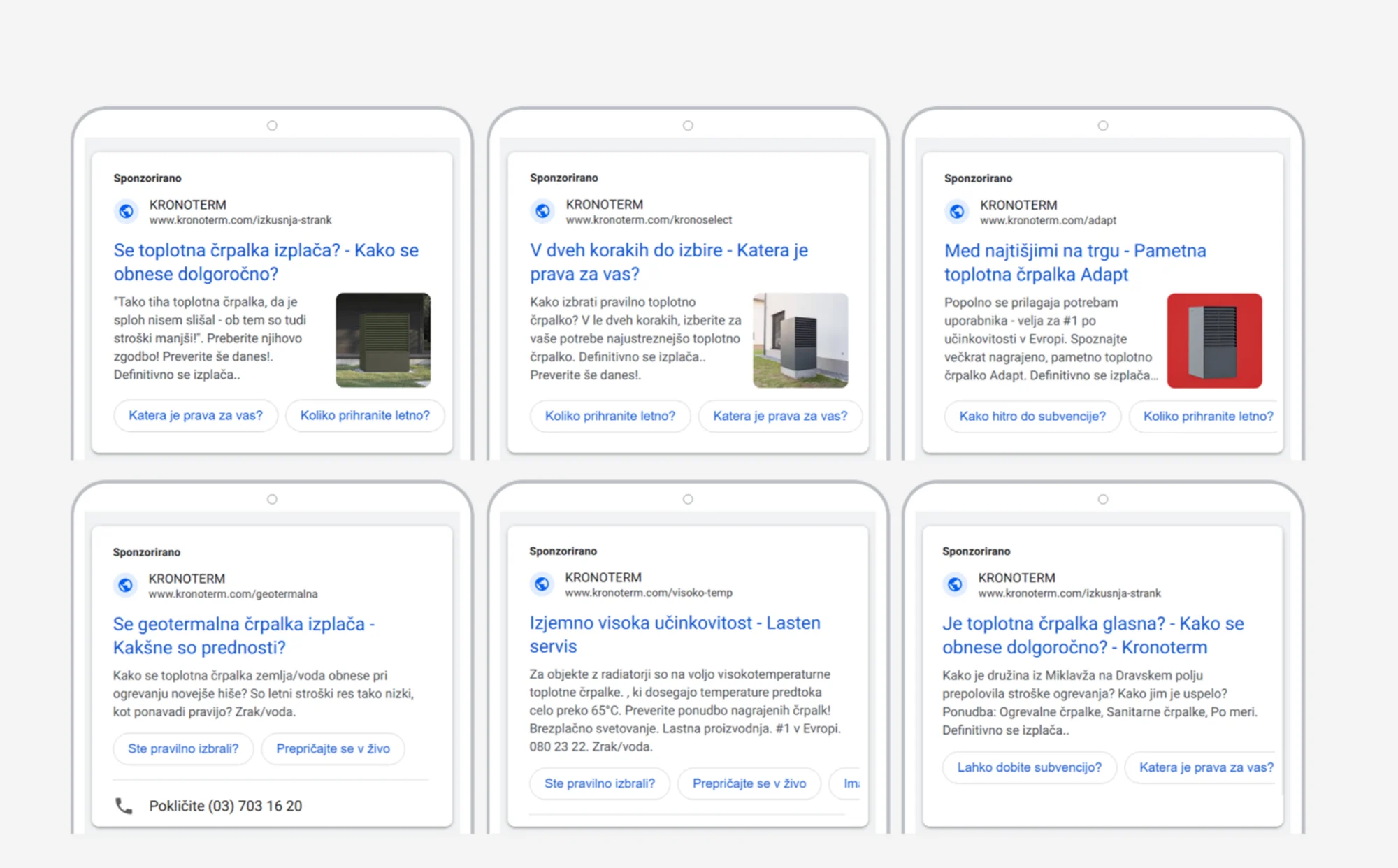
Ads answer various customer questions: device selection, savings, subsidies, and features of individual solutions. An enlarged excerpt of one original ad is shown on the phone.
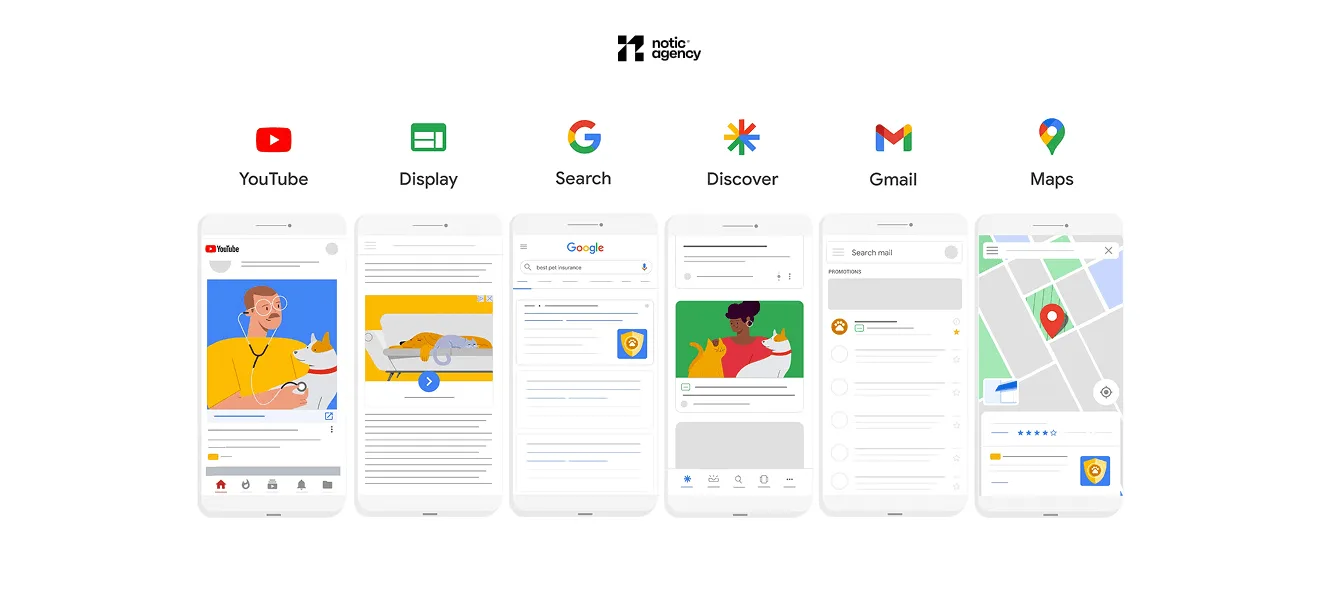
When the user is already familiar with the offering, display formats join the search campaigns. Below are the actual implementations used to present products, savings, and proof of quality.
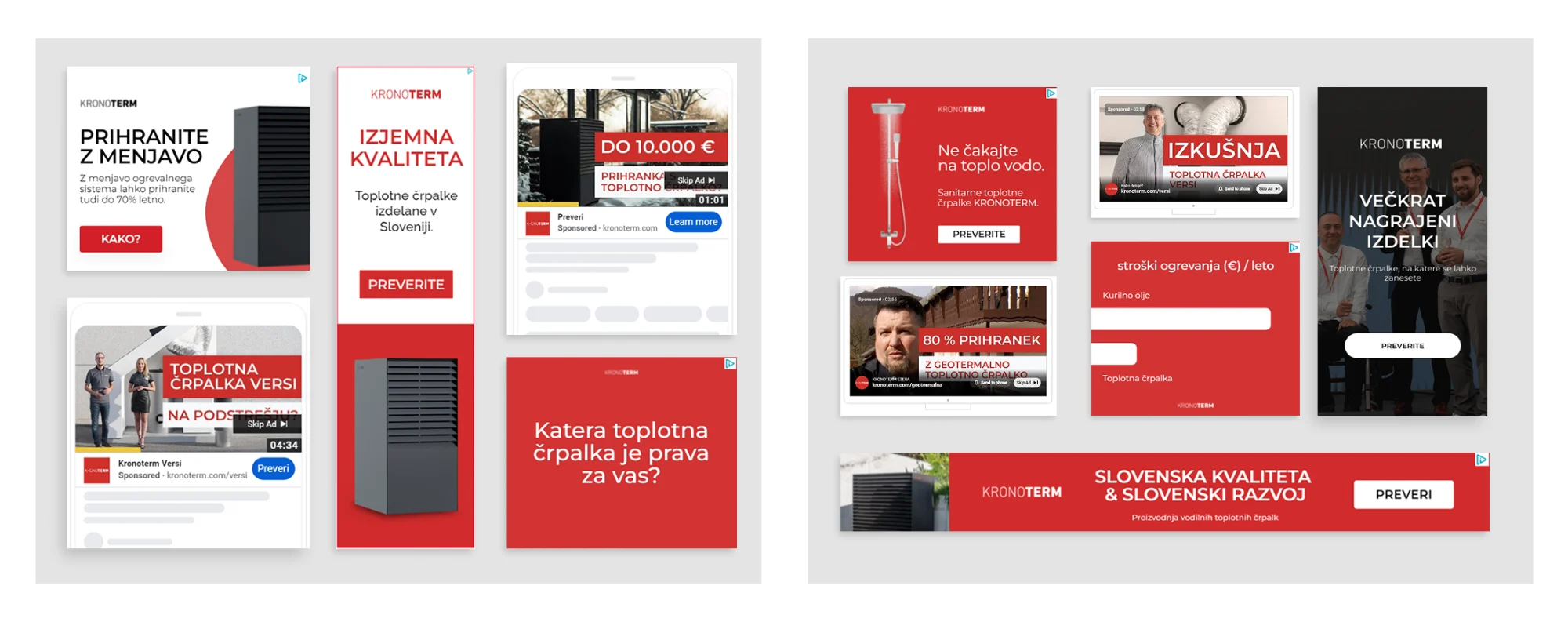
The type of campaign affects the required materials, the scope of preparation, and the way success is measured. When comparing costs, consider both ad spend and the labor each type requires.
| Campaign type | The purpose of | Required materials | Measuring success |
|---|---|---|---|
| SearchSearch campaigns | Reach customers who are already looking for the product or service. | Ad texts, keyword selection, and relevant landing pages. | Cost of qualified lead, sales, and customer acquisition cost. |
| ShoppingShopping campaigns | Sell online store products. | Organized Merchant Center: photos, descriptions, prices, and inventory. | Product sales, ROAS, and margin-adjusted profitability. |
| Performance MaxMulti-channel campaigns | Generating sales or leads across multiple Google channels. | Texts, images, video, and quality measurement; and for products, a data feed. | Sales value, lead quality, and customer acquisition cost. |
| DisplayStory campaigns | Reach new users or re-engage visitors. | Images, logos, and texts or ready-made banners in appropriate formats. | For brand awareness, reach and frequency; for sales goals, conversions and their cost. |
Types and mode of operation: Google Campaign Manager and Performance Max. The criteria in the last column are our proposal for the business evaluation of the results.
A cheaper click in a display campaign does not mean a cheaper sale. Compare the results based on the campaign goal and the quality of the acquired customers. When expanding to multiple markets, also consider translations, local offers, and additional material variations.
Start with the number of customers or leads you want to acquire. Then check the cost per click, website performance, and search volume in the target market. A higher budget makes sense when there is enough relevant demand and you can also service the additional customers.
Campaign example with an average daily budget of €200.
| Monthly for ads | Click | Inquiries |
|---|---|---|
| 3.000 € | 1.000 | 50 |
| 6.000 € | 2.000 | 100 |
| 12.000 € | 4.000 | 200 |
These are scenarios under the same assumptions, without management and additional work. These are not recommended packages or result forecasts. With higher consumption, the cost per click and the conversion rate may change.
Plan Slovenia, Austria, and Germany separately. For each market, check search volumes, cost-per-click, page language, and sales capabilities. Also, separately track searches for your brand and searches for products or services without the brand name.
For the online store, allocate the resources further by product categories, margin, and inventory. For the B2B provider, take into account the time from the first inquiry to the contract. The same monthly investment can therefore require a quite different allocation for two companies.
Let's say you want to acquire 20 new clients. If you convert 20 % of leads into sales, you need 100 of them. With a 5 percent lead submission rate, you need 2,000 clicks.
2,000 clicks × €3
If only 2.5 % of visitors from ads submit an inquiry, the required investment in this case doubles to €12,000. Therefore, use your own website and sales team data in the calculation.
Adjust the assumptions and check the ad spend.
Enter positive values. Percentages must be at most 100.
Calculated illustration, excluding management and other costs. Actual results depend on the campaign and the sales process.Also check the acceptable customer acquisition cost. If you can allocate €500 for this and convert 20 % inquiries into sales, the limit is €100 per inquiry. This is an example, not a recommended limit for all providers. You should also factor in management and other customer acquisition costs.
with the same budget after redesigning measurement, campaign structure, and ads.
When it comes to entrance doors and pergolas, the path to purchase is longer. The customer compares designs, materials, and providers. At Pirnar, we therefore organized Google campaigns by product and search intent so that the ads provided relevant information at each stage of the decision-making process.
The audit revealed incorrectly set up conversions, overly general ads, inappropriate bidding strategies, and missing negative keywords. We began the overhaul with conversion tracking, then reorganized the campaigns and tested ads, landing pages, and bidding methods.
We divided searches for front doors and bioclimatic pergolas according to the purchase intent. We linked the ads to the search topic and the relevant content on the page. Below are actual examples: a Slovenian ad for pergolas and a Dutch ad for front doors with a link to the configurator.

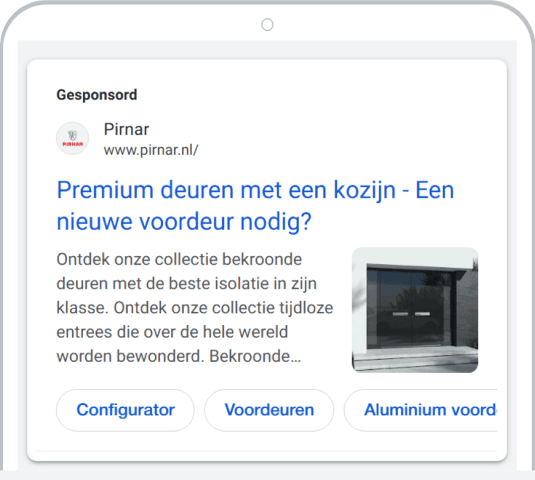
For visitors who did not complete the configuration, we used display remarketing. Alongside search campaigns, we also tested Performance Max. This allowed us to compare approaches and monitor results by individual campaigns.
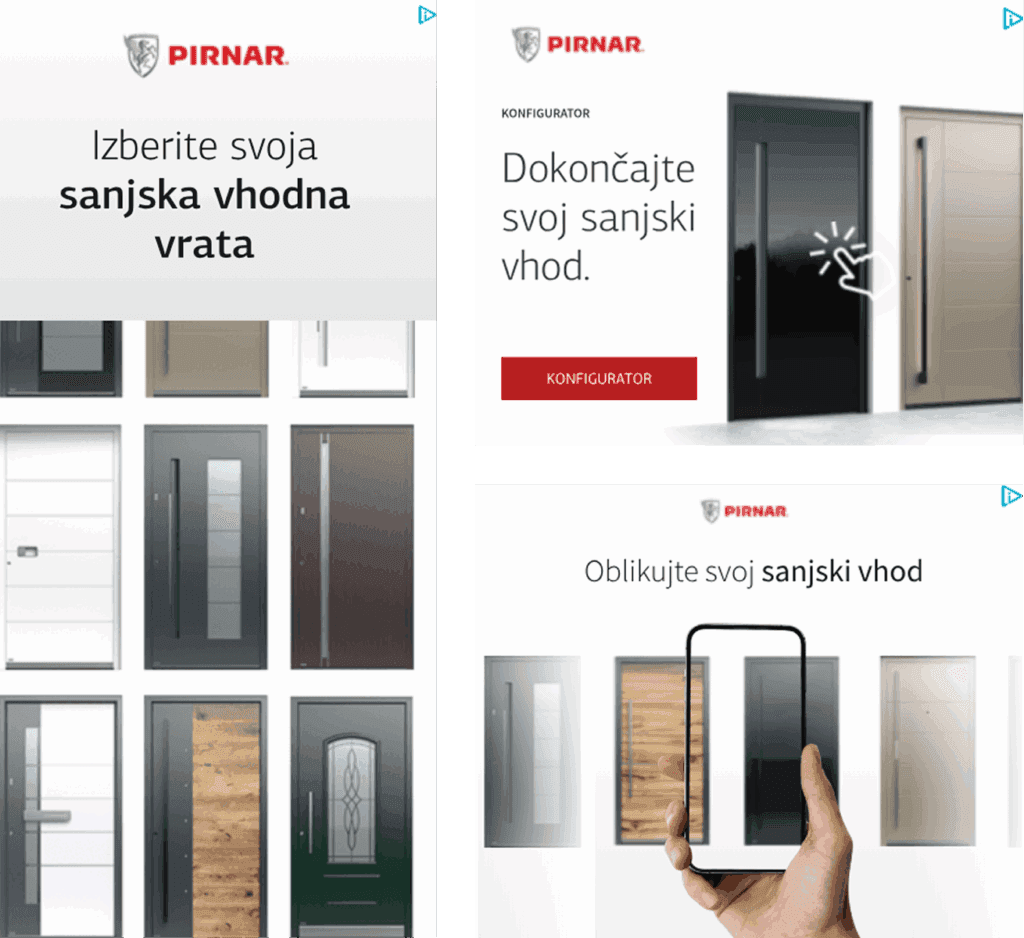
What does this mean for the cost of advertising? Before increasing your spend, check which searches lead users to the configuration and which inquiries subsequently lead to sales. A submitted configuration is not yet a new customer.
Cost per lead, often denoted as CPL, shows how much advertising spend you need for a single submitted inquiry. Divide your ad spend by the number of inquiries received. For the cost per qualified inquiry, only consider those that meet your criteria.
Campaign B has a more expensive click, but cheaper leads. To evaluate profitability, we also need to know how many of these leads resulted in a sale.
The platform can record the submitted form, but the sales team only finds out later whether the lead is qualified. Therefore, track the entire journey and define clear criteria at each stage.
The numbers are a calculated illustration, not a benchmark or a client result.
For the online store, compare revenues with advertising spend, then subtract the purchase value, delivery, returns, and management. ROAS shows the ratio between attributed revenue and ad spend; by itself, it does not indicate profit. When selling through inquiries, link contacts to closed deals in the CRM system. This way, you can see which campaigns are bringing in customers.
The cost of management depends on the scope of work: the number of markets, campaigns, and products, as well as the complexity of measurement. At Notic, online advertising management starts at 649 €; the scope, billing period and tax treatment are specified in the offer. For multiple markets, it should be clear who prepares localized ads, reviews searches and connects results to sales.
Purpose, form, and correct recording of inquiries.
Consumption, query relevance, and lead quality.
What to improve and where it makes sense to increase the investment.
With a fixed fee, compare the scope of work. For percentage-of-spend pricing, check the minimum amount and price changes for higher budgets. If you manage the campaigns yourself, also consider your team's time.
For most campaigns, with an unchanged average daily budget, the monthly spending limit is 30.4 times that amount. At €200 per day, this is €6,080. On any single day, the charged spend for most campaigns can reach up to twice the daily budget. Google's explanation of budgets. Changes during the month apply rules for budget amendment.
The ad budget is the amount spent on the advertising platform. Management is a separate service. Please check both items in the offer, as well as any initial setup, content, and measurement costs.
That depends on the number of clicks, inquiries, and time to purchase. Before starting, define what you want to check and how much data you need to make a decision.
When you measure results correctly, the campaigns generate relevant inquiries or profitable sales, and there is still room for growth in the market. Evaluate scaling based on the additional customer acquisition cost. Just a warning that a campaign is budget-limited is not yet enough to make a decision.
No. Target CPA bidding guides how bids are set. It does not automatically mean you only pay for acquired leads. Google explains how Target CPA works. For a broader overview, read our Google Ads guide.
Send us your target markets, main products or services, and sales goals. If you are already advertising, please include your current monthly spend and data on lead quality or sales. Based on this, we can evaluate where to improve campaigns and where to direct additional funds.
Let's talk