
Zakaj je broad
keyword match morda uporaben v 2026.
- Kategorija Spletno oglaševanje
- Ključne besede Google Ads, Keywords
ON THIS PAGE
UVOD
Broad keywords lahko prinesejo resne
rezultate ali pa vam povsem pojejo
proračun.
Kaj storiti?
V digitalnem marketingu se razprava o broad match keywords še naprej delita mnenja med agencijami in podjetniki, s katerimi smo govorili. Medtem ko nekateri hvalijo njihovo vsestranskost, drugi opozarjajo na njihov potencial, da izčrpajo oglaševalske proračune.
Broad match se je v zadnjih letih bistveno spremenil. Googleova umetna inteligenca lahko zdaj razume uporabniške namene na načine, ki prej niso bili mogoči. To pomeni, da lahko broad match najde stranke, ki konvertirajo, do katerih ne bi prišli z exact ali phrase match.

KAJ JE ŠIROKO?
What is broad match in Google Search Ads?
Broad match je vrsta ujemanja ključnih besed v Google Ads, ki pomaga, da se vaši oglasi prikažejo v širši paleti iskanj, povezanih z vašimi izbranimi ključnimi besedami.
Za razliko od exact match ali phrase match, ki ciljata na specifične fraze ali bliske različice, je broad match zasnovan tako, da zajame širok spekter iskanj, ki lahko vključujejo sinonime, sorodne izraze ali druge različice, za katere se Googleovi algoritmi menijo, da so relevantne.
To omogoča, da vaš oglas doseže več ljudi, ki jih lahko zanima vaš izdelek ali storitev, tudi če ne vpisujejo natančnih besed, ki ste jih ciljali.
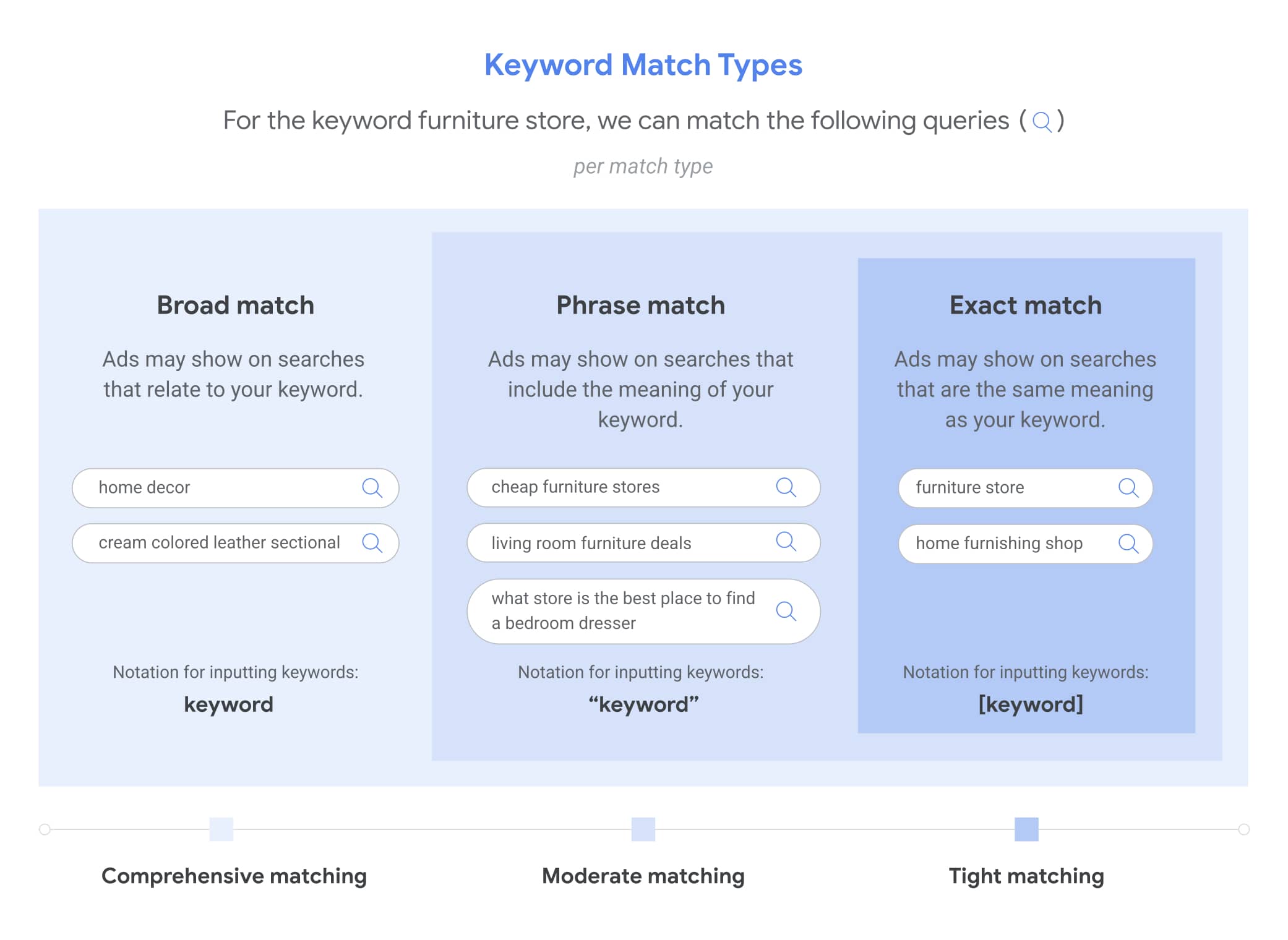
VRSTE UJEMANJA
Exact Match
Your ad shows only when someone types in the exact keyword or close variations. For example, bidding on “heating repairs” in exact match would only display your ad for searches very close to that original keyword.
Phrase Match
Your ad shows when the search term includes your chosen keyword phrase but can also have other words before or after. So, “heating repairs” in phrase match might show for “emergency heating repairs” or “new heater near me,” but not for synonyms like “HVAC.”
Broad Match
Your ad shows for searches that relate to the keyword in a broader sense, including synonyms and other related terms. It’s less precise, but it captures a much wider audience.
Broad match
pendant lights
Searches that relate to your keyword
- kitchen island lighting
- modern hanging lamps
- ceiling fixtures
Phrase match
“pendant lights”
Searches that include the meaning of your keyword
- bronze pendant lights
- pendant lights for dining room
- affordable pendant lights
Exact match
“pendant lights”
“pendant lights”
- pendant lights
- hanging pendant lights
Digital strategy that finally helps you reach your goals?
We identify issues, find ways to improve, and execute them using best practices. There is a reason 95% of our clients stay with us.

NOVE POSODOBITVE ZA BROAD MATCH
Kaj se spreminja pri Google Ads in Broad Match?
Broad match postaja vedno pomembnejši, ker Google uporablja napredno umetno inteligenco in strojno učenje, da bolje razume namen iskanj. Namesto da bi se zanašal izključno na določene ključne besede, lahko Google zdaj razume, kaj ljudje želijo, tudi če uporabljajo drug jezik.
Ta pristop lahko pomaga manjšim podjetjem in affiliate tržnikom doseči več potencialnih strank, ne da bi ročno izbirali vsako možno različico ključne besede. V naslednjih razdelkih bomo raziskali, kaj te spremembe pomenijo za manjše ekipe in kako se lahko prilagodite, da kar najbolje izkoristite broad match.
Googlov najnovejši poudarek na broad match je del širše strategije, da bi oglaševanje naredili bolj intuitivno in usmerjeno v uporabnika. Z napredkom na področju umetne inteligence in strojnega učenja Google želi razumeti, kaj uporabniki mislijo, ko iščejo nekaj, tudi če točna ključna beseda ali fraza ni uporabljena.
Broad match ključne besede so lahko idealne za podjetja v velikih, rahlo posplošenih panogah. Pomisli na prikaz oglasa za pomivalni stroj, ko nekdo išče “kuhinjski aparati” ali za lokalnega izvajalca, ko išče “prenova kuhinje”. Oba primera lahko prineseta veliko klikov iz relevantnega prometa, tudi če to ni bila direktna ključna beseda, ki jo je vnesel tržnik.
KAJ MORATE STORITI
To pomeni manjše zanašanje na exact match ključne besede v prihodnje
Broad match postaja vedno pomembnejši, ker Google uporablja napredno umetno inteligenco in strojno učenje, da bolje razume namen iskanj. Namesto da bi se zanašal izključno na določene ključne besede, lahko Google zdaj razume, kaj ljudje želijo, tudi če uporabljajo drug jezik.
Ta pristop lahko pomaga manjšim podjetjem in affiliate tržnikom doseči več potencialnih strank, ne da bi ročno izbirali vsako možno različico ključne besede. V naslednjih razdelkih bomo raziskali, kaj te spremembe pomenijo za manjše ekipe in kako se lahko prilagodite, da kar najbolje izkoristite broad match.
Googlov najnovejši poudarek na broad match je del širše strategije, da bi oglaševanje naredili bolj intuitivno in usmerjeno v uporabnika. Z napredkom na področju umetne inteligence in strojnega učenja Google želi razumeti, kaj uporabniki mislijo, ko iščejo nekaj, tudi če točna ključna beseda ali fraza ni uporabljena.
KAJ SE LAHKO ZGODI NAROBE
Tveganje nepomembnega prometa in višjih stroškov oglasov
Vendar pa broad match včasih privede do tega, da se tvoji oglasi prikažejo pri iskanjih, ki niso popolnoma relevantna za tvoje podjetje.
Na primer, če ciljate “storitve za prenovo doma” z broad match, se lahko tvoj oglas prikaže pri iskanjih kot “nasveti za popravila doma sam”, kar se morda ne ujema s storitvami, ki jih dejansko ponujaš.
To lahko privede do klikov ljudi, ki verjetno ne bodo konvertirali, kar lahko hitro izčrpa manjši proračun.
To je lahko resna skrb za mala podjetja in affiliate tržnike. Večje količine nepomembnega prometa pomenijo, da oglaševalski proračuni morda ne sežejo tako daleč in zahtevajo skrbno spremljanje, da se izogneš pretiranemu trošenju za klike, ki ne prinašajo vrednosti.
Digitalna agencija, ki te bo dejansko poslušala?
Ne boš verjel, ampak tudi to je mogoče. Spoznaj nas in kako pristopamo k delu s strankami v naši butični digitalni agenciji.

LESS CONTROL
Less control and more dependence on Google's Algorithms
With broad match, advertisers give up some control over which specific search terms trigger their ads, relying more on Google’s AI to make those decisions. For small teams, this means there’s a need to trust Google’s algorithms to show ads to relevant audiences.
While Google’s machine learning is advanced, it doesn’t always get it right, especially if your target audience has niche needs or specific buying behavior. The key to managing this lack of control is to focus on the tools that can refine your targeting within broad match, such as negative keywords, smart bidding strategies, and audience targeting.

MAIN CHANGES WITH BROAD MATCH
What changed with broad match?
Today, in 2025, broad match taps into a much wider pool of signals, things like user search history, device, location, time of day, and broader behavioral patterns.
That’s why sometimes your ad shows up for a search you didn’t expect and still converts. Google is connecting dots behind the scenes that go beyond just keywords.
Here’s what really happens when someone searches for a keyword:
Google analyzes their recent search history
It looks at their device type and location
It considers time of day and seasonal patterns
It evaluates dozens of other behavioral signals
That’s why you’ll sometimes see broad match keywords converting on seemingly unrelated searches. Google isn’t just guessing, but instead finding patterns in user behavior that we can’t see ourselves.
Most marketers still treat broad match like it’s 2020. They use it as a pure volume play, then get frustrated when traffic quality tanks.
HOW TO GET GOOD RESULTS
So, how to actually get good results with broad match?
Broad match isn’t inherently bad. But most people use it wrong, then blame the match type instead of their setup. Here are the most common mistakes we see in accounts, and what to do instead:
1. Track lead quality, not just volume
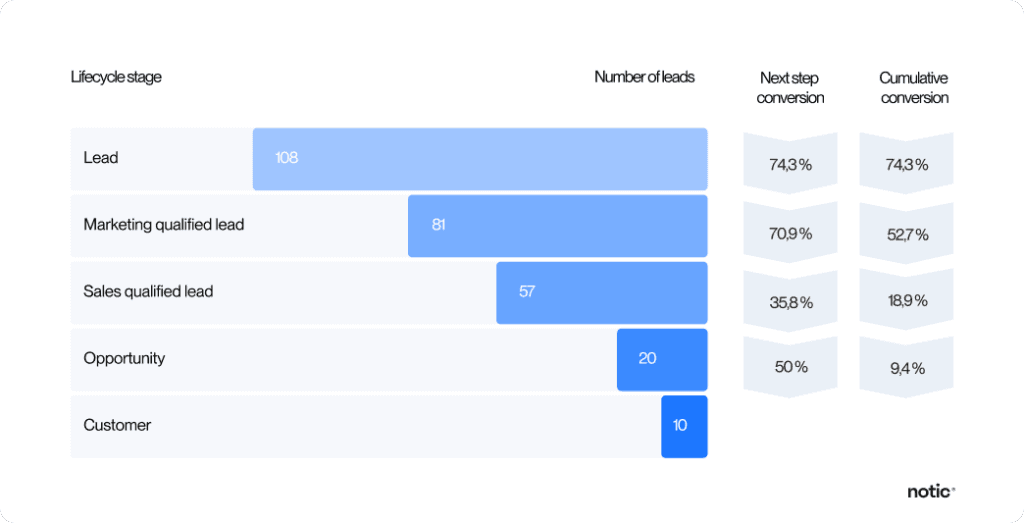
You see a low cost per lead and think you’re winning. You’re probably not. Broad match often delivers the cheapest leads on paper. But when you track those leads through your sales funnel, many disappear. They don’t answer calls. They’re not qualified. They were just curious.
A $50 lead that becomes a customer beats ten $5 leads that go nowhere. Every single time.
What to track instead:
Set up proper tracking: Connect your CRM to Google Ads if you can. Import offline conversions so the algorithm knows which leads actually closed. This teaches Google what a good lead looks like for your business.
Use conversion values. If certain leads are worth more (higher deal size, better fit, faster sales cycle), assign them higher values. The algorithm will optimize for those instead of just chasing volume.
Track metrics beyond the initial form fill. Look at lead-to-opportunity rate. Lead-to-customer rate. Actual revenue per source. These numbers tell you what’s really working.
2. Create a strong negative keyword list
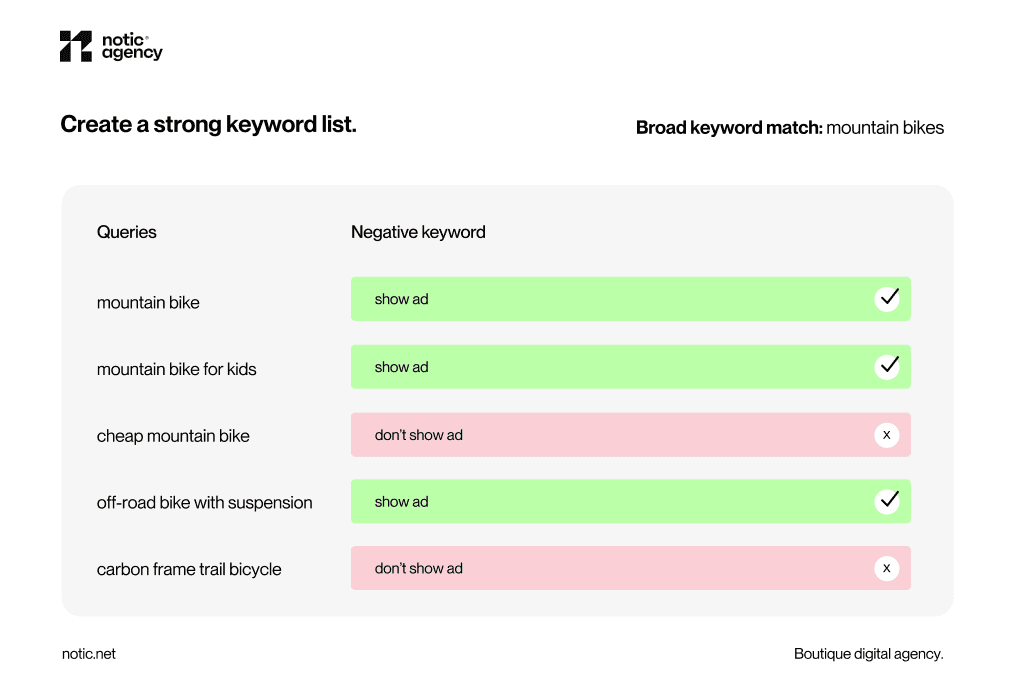
Running broad match without negative keywords is like driving without brakes. You’ll move fast, but you can’t control where you end up.
Negative keywords aren’t optional. They’re the guardrails that keep your campaigns profitable. Smart bidding is powerful, but it needs boundaries to perform at its best.
Start with these:
Add account-level negatives first. Apply them once at the account level and they protect all your campaigns. Broad terms that might’ve appeared in your account before but are not something you want to bid on.
Review your search terms report weekly when you start, then every two weeks once things stabilize. Add 5-10 negatives each time. This is ongoing work, not a one-time task.
The goal isn’t to block everything that looks weird. It’s to eliminate searches with zero chance of converting so the algorithm can focus on what actually works.
3. Set up your budget and bidding strategy correctly
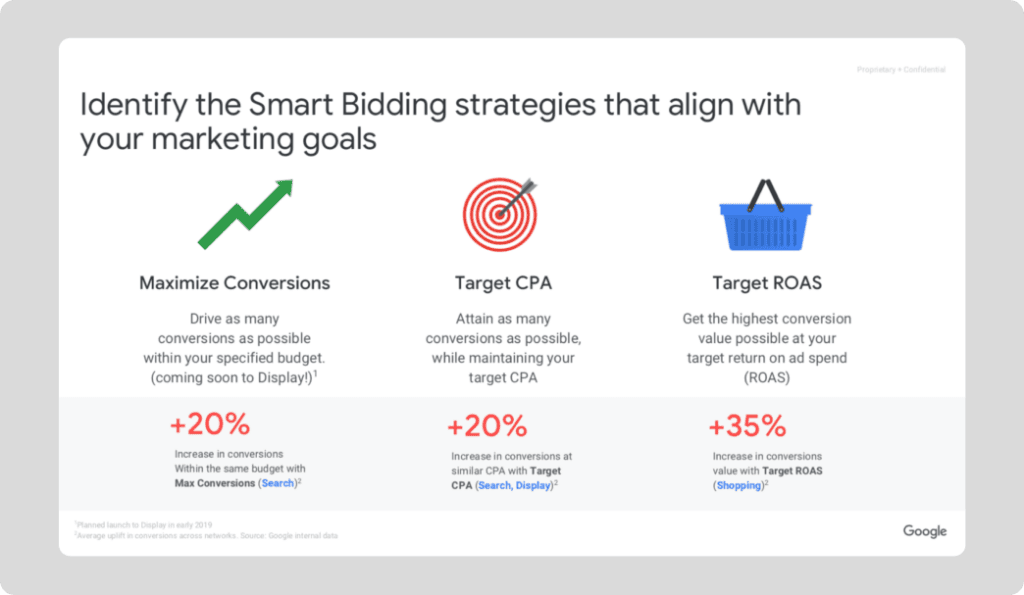
Broad match needs the right environment to perform. Give it too little budget or the wrong bidding strategy, and it fails before it starts.
Use broad match only when you have enough daily budget for the algorithm to learn. You need enough spend to generate meaningful conversion data. Expect higher initial spend during the learning phase. This is normal.
Don’t panic and lower budgets during the first week. Give campaigns 2-3 weeks and at least 50 conversions (if possible) before making major budget decisions.
What this looks like in practice:
Budget setup:
- Reserve broad match for campaigns with adequate daily budgets
- Plan for 3-4 week learning periods before evaluating performance
- Accept that initial cost per conversion will be higher while the system learns
Bidding approach:
- Always use automated bidding strategies (Target CPA or Target ROAS)
- Set realistic targets based on your current performance, not wishful thinking
- Let the algorithm run for at least 2 weeks before adjusting bid targets
FINAL THOUGHTS
Broad keyword match is not the villain it’s made out to be.
It’s just a tool that requires more setup and more trust in the system than most advertisers are comfortable with.
The old playbook of tight keyword control is fading. Google’s algorithms now access behavioral signals that manual targeting could never touch. Fighting that shift means missing opportunities.
But that doesn’t mean you should blindly trust the algorithm either.
Here’s the balance:
Give the system room to work, but set clear boundaries. Use smart bidding, but track what actually matters to your business. Let broad match explore, but build a solid negative keyword foundation first.
The advertisers winning with broad match right now aren’t the ones throwing money at it and hoping for the best. They’re the ones who understand how modern search advertising actually works. They track lead quality, not just lead volume. They organize their accounts properly. They give campaigns time to learn.
Start here if you’re testing broad match:
Pick your 3-5 best performing keywords. Move them to broad match in a separate campaign with smart bidding. Set up proper conversion tracking and negative keywords. Give it a month with adequate budget. Then look at the actual results, not your assumptions about how it should perform.
You might be surprised by what converts. That’s the point.
Verjetno vas
zanima tudi: