
Meta Ads completely changed (again)!
Here's what to do.
- Category Online advertising
- Keywords Meta Ads, Strategy
ON THIS PAGE
INTRO
What actually changed and what can be done.
If your Meta ads are burning through budget faster than before, creative fatigue is hitting in weeks instead of months, and your old testing playbook stopped working, you're not alone. Something fundamental changed with how Meta delivers ads.
That something is the new Andromeda update.
This is not another algorithm tweak you can ignore. Meta actually rebuilt from the ground up how ads get chosen and shown to people from the ground up. And unless you understand what changed, you're fighting with one hand tied behind your back.
Let's cut through the technical jargon and focus on what actually matters for your campaigns.
TECHNICAL OVERVIEW
What the Andromeda update actually is
Meta loves to wrap things up in impressive-sounding technical language. Here's how they officially describe it:
“Meta Andromeda is an innovative end-to-end hardware, software, machine learning co-designed system introduced in 2024, with Meta Training and Inference Accelerator (MTIA) and NVIDIA Grace Hopper Superchip.”
Cool. But what does that mean for you?
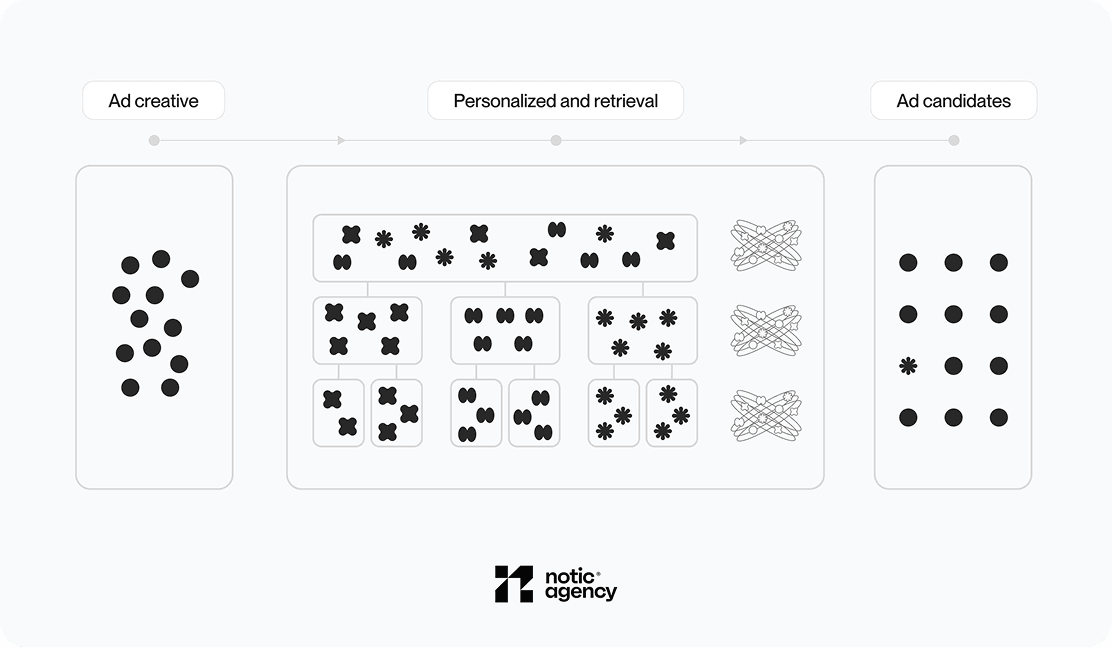
Andromeda is Meta's new AI brain for deciding which ads get shown. Think of it as a smart recommendation engine that looks at millions of ads and billions of data points to figure out the best ad to show the right person at the right time.
Before Andromeda, Meta's system was more rules-based. Like checking boxes to match ads with people. Now the system learns in real-time what works for different people and adapts on the fly.
What it actually means
Andromeda is Meta's new AI brain for deciding which ads get shown.
Think of it as a smart recommendation engine that looks at millions of ads and billions of data points to figure out the best ad to show the right person at the right time.
Before Andromeda, Meta's system was more rules-based.
Like checking boxes to match ads with people. Now the system learns in real-time what works for different people and adapts on the fly.
Digital strategy that finally helps you reach your goals?
We identify issues, find ways to improve, and execute them using best practices. There is a reason 95% of our clients stay with us.
The retrieval bottleneck
Why your ads feel invisible.
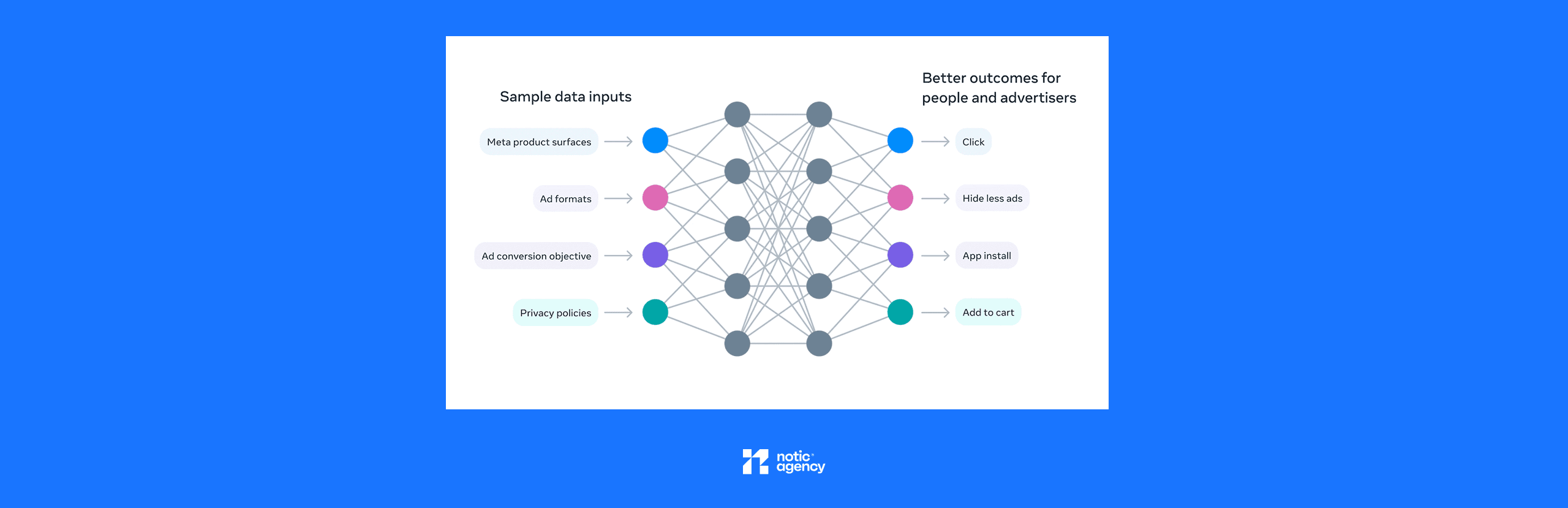
Here's the part that changed everything. Andromeda introduced something called the retrieval stage, which happens before ads even enter the auction.
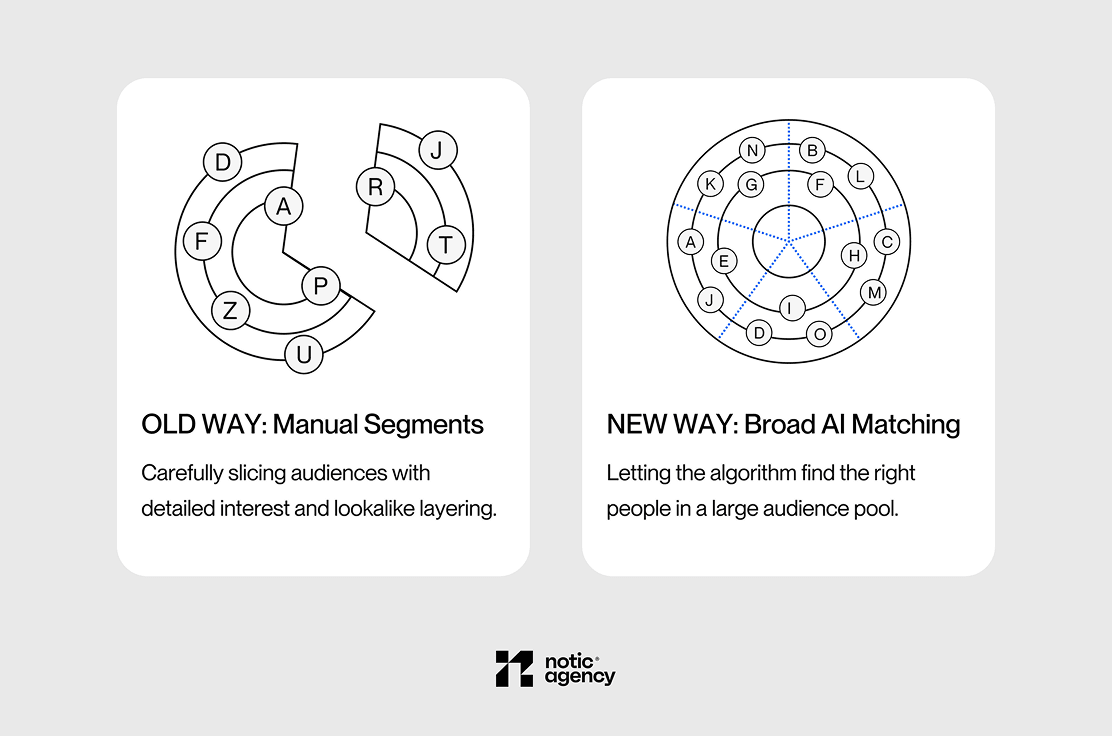
The old system gave every ad a chance to compete. You uploaded an ad, it went into the auction, and Meta figured out where to show it.
The new system pre-screens everything first, which might mean your ads went “invisible” if your creatives were not differentiated enough. Meta now processes tens of millions of ads and narrows them down to a few thousand candidates before the auction even starts. If your ad doesn't make that short list, it never gets a chance.
CREATIVE DIVERSIFICATION
Why small tweaks don't work anymore
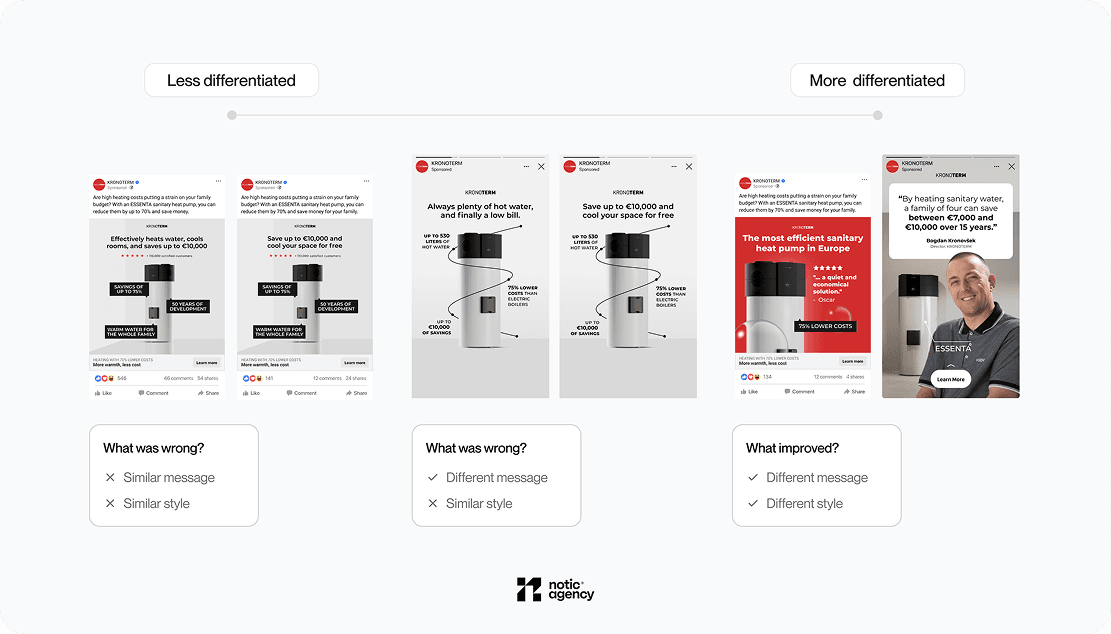
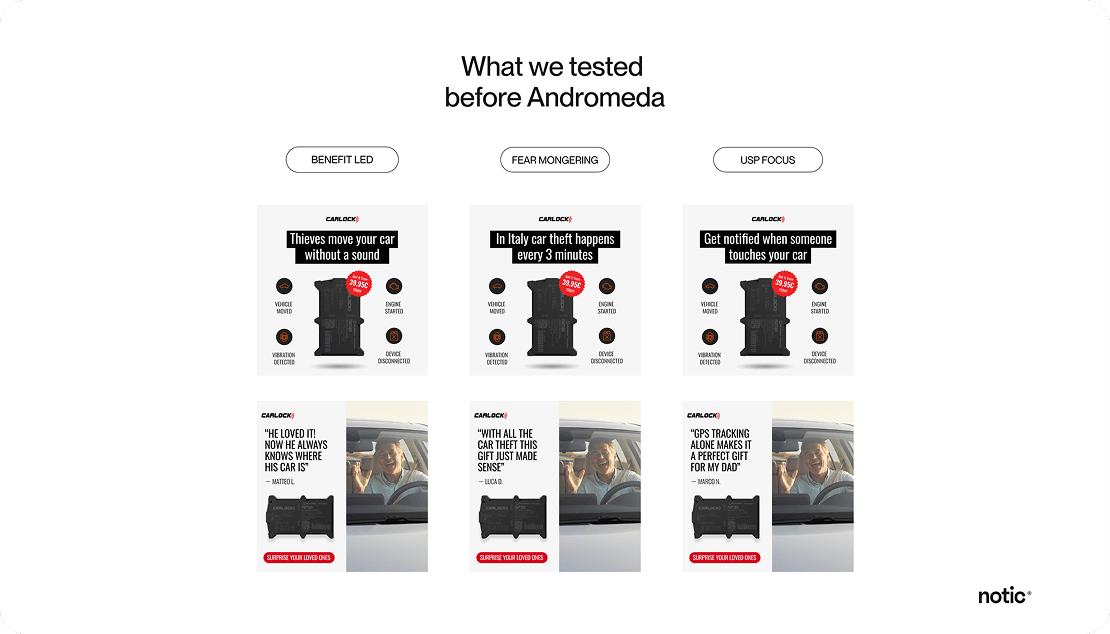
This is why making small tweaks to the same creative doesn't work anymore.
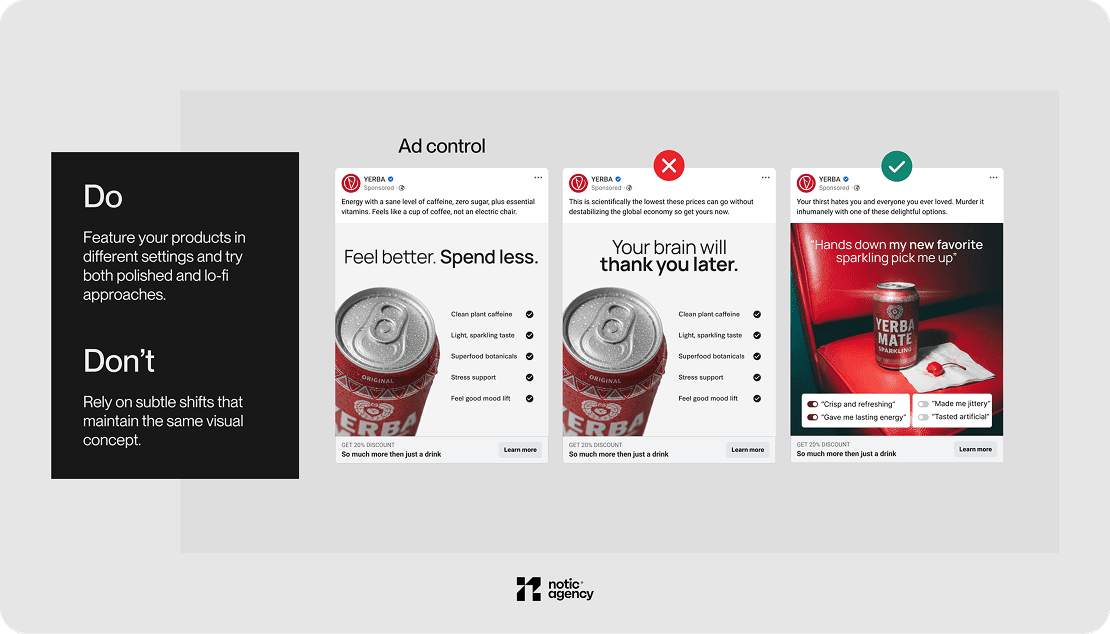
Change the colour of a button or swap out a headline? Andromeda sees that as the same ad. You're not giving the system anything new to work with. Your ad gets filtered out before it can prove itself.
Creative diversification is the new targeting.
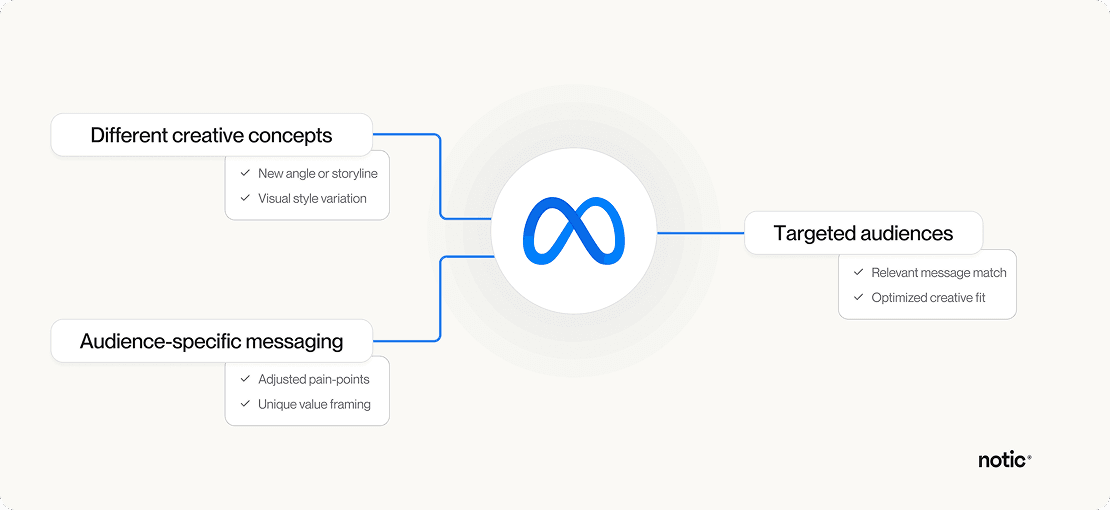
So if minor variations don't cut it, what does? Meta's official guidance is clear. Focus has shifted from niche targeting to creative diversification as the best lever to find relevant audiences.
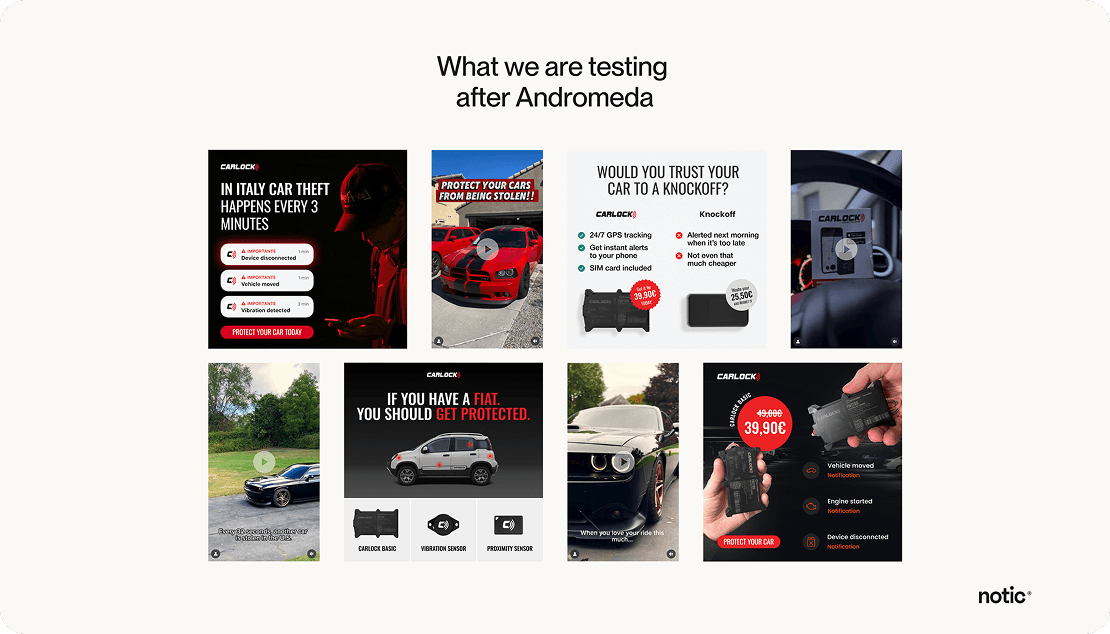
But “creative diversification” doesn't mean pumping out 20 versions of the same thing with slightly different headlines. It means creating ads that are meaningfully different from each other.
Key areas of diversification
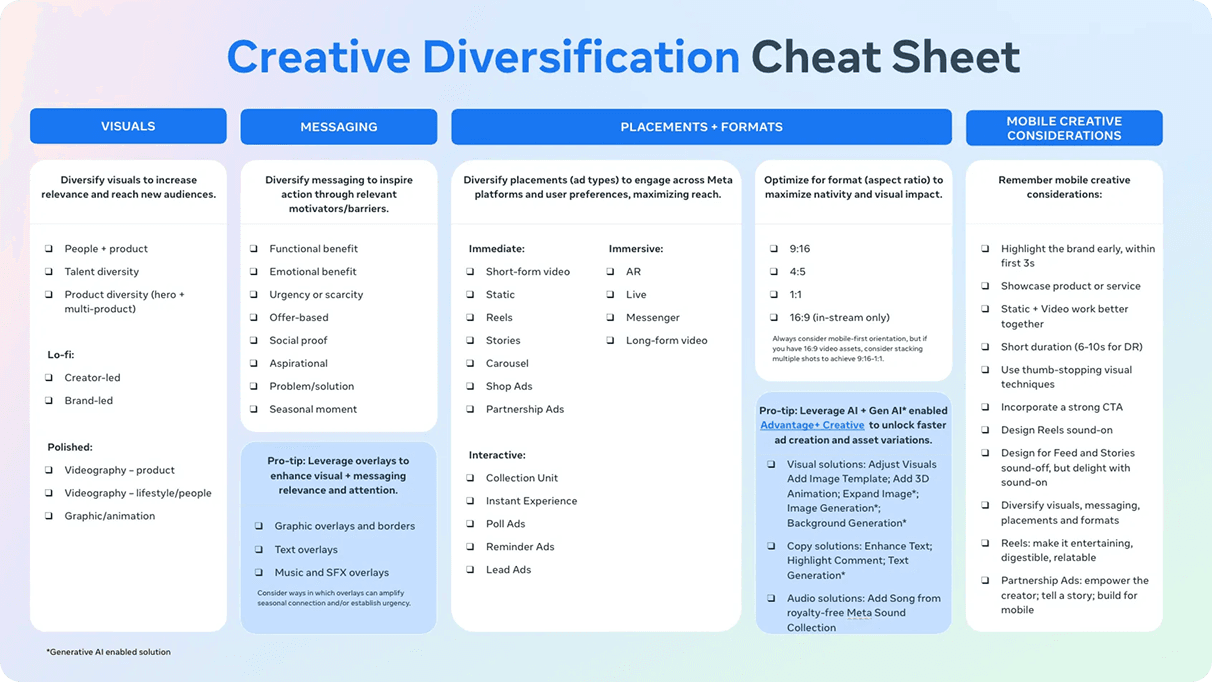
Creative diversification happens across a few key areas:
Concepts and angles. Problem/solution, pain points, testimonials, product features, social proof, education. Each one appeals to people at different stages.
Formats. Short video, long video, static images, carousels. Different people respond to different formats, and different placements work better with certain aspect ratios.
Persons. Your product probably appeals to more than one type of customer. A busy parent has different pain points than a young professional, even if they both need the same solution.
Text variations. Don't just change a word or two. Write completely different hooks that speak to different concerns or benefits.
The more meaningful variety you provide, the more opportunities Andromeda has to connect the right message with the right person.
How it looks like in practice
Let's get specific. Here are the tactics that actually work under Andromeda.
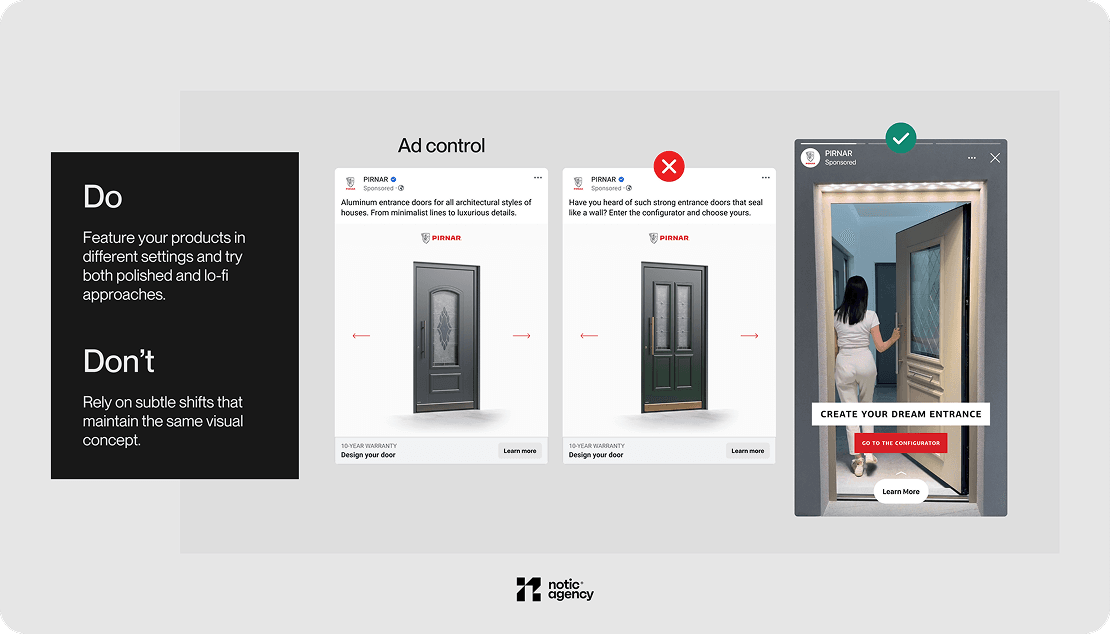
Creating more ads helps, but only if they're actually different. Two images that look similar won't perform any better than using the same image twice.
Meta wants variety that's visually obvious. If someone scrolling their feed sees your ads, they should look like different ads, not slight variations of the same thing.
A digital agency that will actually listen to you?
You won't believe it, but it's possible. Get to know us and how we approach working with clients in our boutique digital agency.

Mix your formats
Some people love video. Others skip past anything that moves. Your ideal customer might scroll Reels all day but never watch videos in their Facebook feed.
Give Meta options by including videos, static images, and carousels in the same ad set. The algorithm will figure out which format works best for each person and placement.
You can do this with separate ads, or you can use tools like Flexible Format or Dynamic Creative to put 10 different images or videos in a single ad. Meta mixes and matches them based on who's seeing the ad and where.

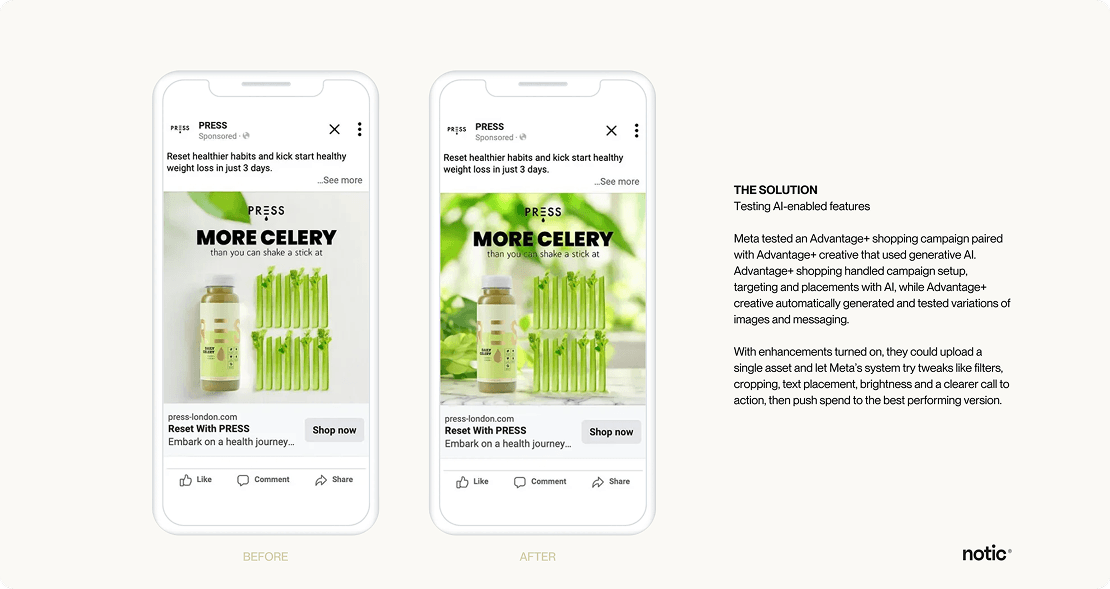
Try AI-generated variations
I know, everyone rolls their eyes at Meta's AI-generated images. But they're an easy way to add diversity fast.
When you upload creative, Meta suggests AI-generated variations inspired by your original. Or if you're promoting a product, AI-generated backgrounds can give you several different looks without starting from scratch.
The data shows these often perform well. In many cases, AI-generated backgrounds outperform the original image. And you can add up to 20 variations (10 AI-generated images plus 10 pieces of related media from past campaigns) to a single ad.
That's instant diversity with almost no extra work, but vary from product to product.
Consolidate and let ads do the targeting
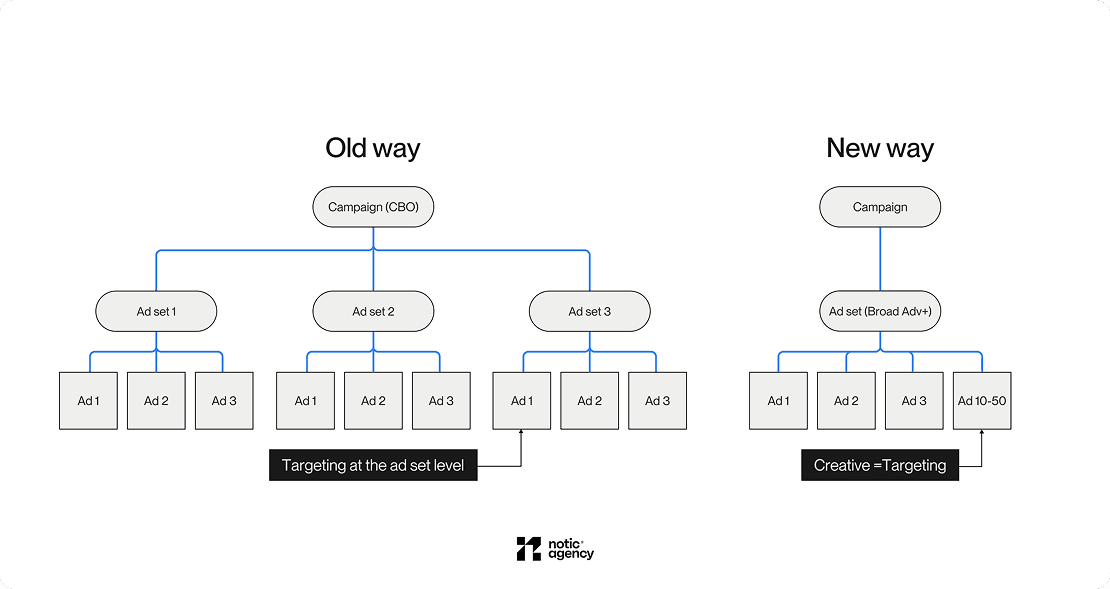
If you've been building campaigns with multiple ad sets for different audience segments, this is your cue to rethink that approach.
Andromeda works best when you consolidate campaigns and put more creative variations in fewer ad sets with broad targeting. Targeting largely happens in the ad now. An ad focused on busy parents will naturally attract busy parents. An ad focused on budget-conscious shoppers will attract people who care about price.
Broad targeting gives the algorithm room to optimise. When you restrict targeting too much, you limit Andromeda's ability to find the right people for each creative. Keep ad sets wide and let the system do its job.
Advantage+ campaigns are built for this. In most cases, Advantage+ campaigns with automated placements and broad targeting are the cleanest fit for how Andromeda works.
You still need different campaigns for different goals. But you probably don't need multiple ad sets just for targeting purposes. Your time should be spent creating diverse, thoughtful ads, not managing complicated campaign structures.
MAIN Differences
Key differences from before the update
Meta's official guidance is clear. Focus has shifted from niche targeting to creative diversification as the best lever to find relevant audiences.
But “creative diversification” doesn't mean pumping out 20 versions of the same thing with slightly different headlines. It means creating ads that are meaningfully different from each other.
Here are the main changes from before and after the Andromeda update:
Ad selection
Rules-based matching, every ad got a chance to compete
AI-driven retrieval, ads pre-screened before auction
Ad scaling
You could scale a few winning ads and their variations for months.
You need a steady stream of different, fresh creative concepts.
Main focus
Audience targeting (demographics, interests, behaviours)
Creative diversification (multiple angles, formats, personas)
Ad variations
Minor tweaks worked (colour changes, small headline edits)
Need meaningful differences (distinct concepts, formats, visuals)
Campaign structure
Multiple ad sets for different audience segments
Consolidated campaigns with broad targeting
Recommended ad limit
Maximum 6 ads per ad set
No limit (10, 20, 50+ ads work if diverse)
Testing approach
Slow A/B testing of individual elements
Continuous rotation of diverse creative
Targeting happens in
Campaign and ad set settings
Within the ad creative itself
Optimisation focus
Bid strategies, audience refinement, placement selection
Ad quality, format variety, message diversity
STRUCTURE DIFFERENCES
What about ad limits and the old 6 ad rule?
Meta used to recommend no more than six ads per ad set. That guidance quietly disappeared in early 2025, almost certainly because of Andromeda.
Advertisers are finding success with far more than six ads now. Some are running 10, 20, even 50 ads in a single ad set. The system is designed to handle that volume as long as the ads are meaningfully different.
More ads isn't a magic bullet, so make sure to test with your ad account. Your goal is to provide enough creative diversity while also making sure each ad is strong on its own. But beware:
Creative fatigue happens faster.
Because Andromeda tests more combinations at once, creative fatigue shows up sooner than it used to. An ad that performs well for a month might start declining after a couple weeks. The fix is continuous creative rotation. Plan to refresh your ads regularly. Test new angles, try different formats, and don't get too attached to any single piece of creative.
ACTION PLAN
Your action plan
Andromeda raised the bar, but this shift can actually work in your favour if you adapt.
Stop trying to outsmart the algorithm with targeting tricks and campaign hacks. Start creating ads that actually speak to the people you want to reach.
The more diversity you provide, the better Andromeda performs. And the better your ads are, the more efficiently your budget gets spent.
Here's what you can do:
1. Audit your current creative.
Andromeda raised the bar, but this shift can actually work in your favour if you adapt. Start by taking a hard look at what you're running right now.
Pull up your active campaigns and look at every ad. Are they actually diverse, or are they minor variations of the same thing? Be honest here. If you've got five ads that are all product shots with slightly different backgrounds, that's not diversity.
Try different formats (video vs. static), different concepts (testimonial vs. product demo), different angles (pain point vs. benefit focused), different personas (targeting different customer types).
2. Simplify your campaign structure
Next, look at how you've organised your campaigns and ad sets. If you're running multiple ad sets with different targeting parameters to reach different audience segments, it's time to consolidate.
The old playbook was all about segmentation. Create an ad set for women 25 to 34, another for men 35 to 44, another for people interested in fitness, and so on. The problem is this limits how much data each ad set gets, which means the algorithm learns slower.
Instead, consolidate into fewer ad sets with broad targeting. You still need different campaigns for different objectives (conversions vs. traffic, for example), but you probably don't need five ad sets all targeting conversions with slightly different audiences.
3. Focus your time on the ads themselves
Your time is better spent creating ads that speak to different people in different ways. That means actually thinking through who your customers are, what problems they're trying to solve, and how your product helps them.
If you sell project management software, don't just create one ad about “staying organised.” Create one ad that speaks to overwhelmed managers drowning in emails. Create another that speaks to remote teams struggling with coordination. Create another that focuses on the time saved by automation. These are all different angles that will resonate with different people, and Andromeda can figure out who needs to see which message.
4. Check your tracking
Before you do anything else with your campaigns, make sure Meta can actually see what's happening after someone clicks your ad. This is foundational. If your tracking is broken, nothing else matters.
Go into Events Manager and check that you're capturing all the key events. View content, add to cart, initiate checkout, purchase. If you're seeing gaps or inconsistencies, fix that first. Check your pixel implementation, make sure your events are firing correctly, and verify that the data is flowing into Meta.
5. Rotate creative regularly
Finally, build creative rotation into your process. Don't wait until you notice performance dropping off. By then, you've already wasted budget on fatigued creative.
Set a schedule for reviewing and refreshing your ads. Every two weeks, look at your ad performance. Identify the bottom 20% of performers and pause them. Then add new ads with fresh angles or formats to replace them. Keep the top performers running, but have new creative ready to swap in when they start to decline.
This doesn't mean you need to create entirely new campaigns from scratch every two weeks. You can refresh by changing the angle (pain point to benefit), switching formats (static to video), or speaking to a different persona (busy parents to young professionals). The key is continuous iteration so you're always giving Andromeda fresh creative to work with.
Probably you
Also interested in: